- Removed grid-snapping for area coordinates on scaling windows.
  That caused the areas to shrink or expand, and eventually corrupt screen layouts.

- Added simple but efficient life resize for OSX. I need to know why this is so much
  code for Windows... I suggest Windows to just copy same method; dispatch the queue,
  and just let the event system draw.
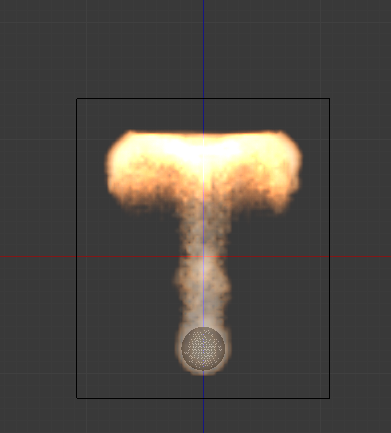
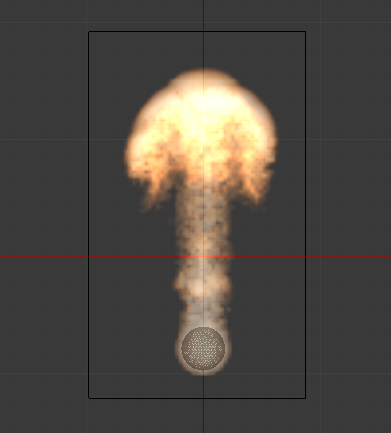
This was caused by a "hack" Daniel Genrich introduced in his moving obstacles commit in r46050. I suppose it was originally added to prevent issues with too fast moving obstacles, but now it ended up limiting maximum velocity of higher resolution simulations.
Here is an comparision of 184 resolution simulation (simulation area limited by adaptive domain):
https://www.miikah.org/blender/smoke_with_pressure_limit_hack.pnghttps://www.miikah.org/blender/smoke_without_pressure_limit_hack.png
I now reverted that hack until a better solution is found. Daniel, can you check this out? Pressure was limited to maximum of dt * dx (= dt / res) which doesn't make sense to limit pressure based on grid resolution. Maybe better to limit with a constant factor instead?
This caused high resolution smoke to always regenerate new tile when domain was reinitialized, slowing down especially adaptive domain simulations. Now noise tile is saved in Blender temp directory instead.
* Added Westin Sheen and Westin Backscatter closures for testing, useful for Cloth like effects.

Only available via OSL, added an example OSL shader to the Templates (Text Editor).
* Also do pressure interpolation for brush size and spacing.
* Do smoothing of pressure when smooth stroke and sample average is enabled.
* Revert the OS X specific pressure change to pressure ^ 2.5, for low pressure
  values like 0.05 it makes the pressure 100x lower, which is problematic. If
  we need to adjust the pressure curve it should be done for all platforms.

Still weak:

* Pressure of first touch on tablet is difficult to control, usually it's low
  which makes the stroke start out small or soft, but other times not. Finer
  event capturing at ghost level would help, along with pressure changes without
  mouse movement, but this may also need different paint stroke logic.
* Brush radius is rounded to integers, this gives noticeable stepping.
* Brush falloff is not antialiased, gives noticeable aliasing for small brush
  sizes which was always a problem, but is more common with size pressure control.
So now, in the new "other" tex context, you can (depending on active data) have direct access to modifiers', force's or brushes' textures...

I also refactored a bit how texture contexts are handled (once again, we had some quite similar code in both space_buttons and RNA sources). This should also solve some harmless glitches like "no texture context selected in UI" sometimes when you remove data related to current texture (see e.g. after removing the material from default cube, in startup scene).

This usage of two different systems for textures, and the handling of switches between them, has been a bit tricky to get working right, but it is OK now I think. I also had to add a bool flag to buttons space, SB_TEX_USER_LIMITED (use_limited_texture_context in RNA), which indicates "new shading" texture code whether it has to ignore materials, lamps etc. (BI) or not (Cycles).

Btw, pinned textures from modifiers/force/etc. were also broken (showing nothing), now it should work too.

Thanks to Brecht for reviewing.
Another issue with the recent Ghost changes here. For some reason key up events
are not coming through when the command key is pressed. I can't figure out why,
for now just always handle them, still fixes the original bug.
interact better with system shortcuts.

This is a special shortcut for switching between views and does not get
delivered directly to our view when we pass it through the application key
event handling path. We only have a single OpenGL view, so there's no need to
pass it on to the application, instead just interpret it directly.
insert text in the text editor and do the associated operation like minimizing the
window or switching windows.

The code was always doing both without trying to ensure only one is done. Now we
integrate a bit better with the event handling and pass the event to NSApp, which
then decides to handle the event itself or pass it on to the window, from where
we then send it back to be handled.
Problem was that due to group proxy node the anisotropic node did not detect
early enough that it needs generated texture coordinate data to generate the
tangent. Now the proxy nodes are removed earlier.